How it works

How EB-3 sponsorship works, end to end.

For Filipino citizens, currently in the Philippines

There are five stages. Each one belongs to someone different. We'll walk you through how long it really takes, what we do, what the employer does, what the attorney does, and what's on you. We can't promise outcomes — those decisions belong to USCIS (the U.S. immigration agency) and the U.S. State Department.

The path at a glance

Five stages from the first call to your first U.S. workday.

Right now, the full process takes about 4–5 years for EB-3 from the Philippines. Each stage below is explained in detail further down the page.

Stage 01

Screening & match

Eligibility call, document review, and matching you to a specific employer and role.

You · Most Solutions
Stage 02

PERM filing

Your employer-sponsor and their attorney run U.S. Department of Labor recruitment and file the PERM labor certification.

Employer · Attorney · DOL
Stage 03

I-140 petition

Once PERM is certified, the employer files the I-140 immigrant petition with USCIS to confirm the job and the role classification.

Employer · Attorney · USCIS
Stage 04

Visa bulletin wait

Your priority date — the day PERM was filed — sits in queue until it becomes current under the U.S. visa bulletin.

U.S. Dept. of State
Stage 05

Visa interview & arrival

Consular processing in Manila: medical exam, interview, visa issuance. Then travel, onboarding, and your first day on the job.

You · Consulate · Employer
Stage 01 of 05

Screening & match.

We check if you fit the program and match you to a specific U.S. employer and role.

Who actsYou and Most Solutions. An attorney looks at tricky cases.
Typical durationA few weeks, depending on how fast you send your documents.
FeesNone. The first check is free.

What happens

  • You fill in a short form, then we have a call in English.
  • We check if you fit the program — full list on Who Can Apply.
  • Anything tricky in your background goes to the immigration attorney first — before you pay anything.
  • If you're a good fit, we match you to a specific job with a specific employer. The job decides the wage that gets filed with the U.S. government.

What you do

  • Disclose immigration, criminal, and medical history up front.
  • Provide ID, work history, and immediate family details (spouse, unmarried children under 21).
  • Read the program materials so the call covers your specific case.

What you won't do

  • Pay anything. Screening is free.
  • Quit your job — nothing has been filed yet.
  • Get matched to a role that isn't real, available, and PERM-compliant.
Stage 02 of 05

PERM labor certification.

The employer runs U.S. recruitment for the role and files PERM with the Department of Labor.

Who actsThe employer and their attorney. The Department of Labor decides.
Typical durationSeveral months. Longer if audited.
Your roleProvide documents on request. Stay reachable.

What happens

  • The employer runs U.S. recruitment for the role, as required by the U.S. government. The job must be genuinely open, and no available U.S. worker can fill it.
  • The attorney prepares the PERM paperwork — including the standard wage and the recruitment results — and the employer files it with the Department of Labor.
  • The day the PERM is filed becomes your priority date — your place in line.
  • The Department of Labor approves it, asks for more information, or audits it. Audits add months.

What you do

  • Send the documents we ask for, quickly and correctly.
  • Stay easy to reach — we may need new documents on short notice.
  • Don't make big life changes — getting married, new passport, moving countries — without telling us first.

What you've accomplished at this stage

This is a real milestone. With your PERM approved, the U.S. government has officially confirmed your job is genuine and that no U.S. worker is available to do it. Your priority date — your place in line — is locked in. A major piece of your case is now in place. From here, the case moves into the I-140 step.

Stage 03 of 05

I-140 petition.

With PERM certified, the employer files Form I-140 with USCIS to formalize the EB-3 case.

Who actsThe employer and their attorney. USCIS decides.
Typical durationSeveral months at regular processing. Faster with premium processing (extra government fee).
Your roleProvide documents on request.

What happens

  • The attorney prepares the I-140 paperwork — the approved PERM, proof your employer can pay your wage, and proof you're qualified for the role — and the employer files it with USCIS.
  • USCIS approves the petition, asks for more evidence, or denies it. If your PERM was clean, I-140 usually goes through.
  • An approved I-140 confirms the case is solid — but it does not let you enter the U.S. yet.

What you do

  • Provide any additional employment, education, or experience documents the attorney requests.
  • Keep your contact details current.

What you've accomplished at this stage

Major milestone. With your I-140 approved, U.S. immigration has officially confirmed your case is solid and your job classification is correct. The legal foundation of your case is now built. Two big steps are behind you. What's left: waiting for your priority date to become current, then your visa interview.

Stage 04 of 05

The visa bulletin wait.

Your priority date sits in line until it becomes current. This is the longest part of the process — and the main reason EB-3 from the Philippines takes around 4–5 years from start to finish today.

Who actsThe U.S. State Department publishes the monthly bulletin. Your case waits.
Typical durationSeveral years — most of the 4–5 year total. Numbers shift with each bulletin.
Your roleStay reachable. Keep documents current.

What happens

  • Every month, the U.S. State Department publishes the visa bulletin. It says which priority dates can move forward to a visa interview that month.
  • Right now, priority dates from the Philippines are sitting in line for several years before becoming current. This wait is the biggest piece of the 4–5 year total. The numbers change with every monthly bulletin.
  • You cannot work in the U.S. during this stage. The case exists, but no visa has been issued yet.
  • When your date becomes current, the case moves to the visa interview stage at the U.S. Embassy.

What you do

  • Live your life. Keep working in the Philippines. Don't quit on a pending case.
  • Tell us about every change — marriage, divorce, children, address, passport, name.
  • Keep passports current for you and dependents.
  • Stay reachable. When your date becomes current, we move fast.

What the wait really means

Today, plan on roughly 4–5 years from start to U.S. arrival. That is the realistic expectation, not the worst case. If you need a U.S. job in months, this is not the right path. If you can plan that far ahead, the wait is what a real green card costs — not a short-term work permit.

Monthly updates from us

The U.S. State Department publishes a new visa bulletin every month. Every month, we send you a clear update — where the bulletin moved, what it means for your priority date, and how much closer (or further) you are from your visa interview. You do not need to track the bulletin yourself. You will not be left wondering during a multi-year wait.

Stage 05 of 05

Visa interview & arrival.

Consular processing in Manila, the medical exam, the interview, and — if approved — travel and onboarding.

Who actsYou, the U.S. Embassy in Manila, an approved doctor, your attorney, and Most Solutions for the move.
Typical durationSeveral months from your priority date becoming current to your first U.S. workday.
Your roleHeavy. Documents, medical, interview, travel.

What happens

  • The U.S. National Visa Center collects your documents and your visa application forms.
  • You take the immigration medical exam with a doctor approved by the U.S. government.
  • You, your spouse, and your unmarried children under 21 attend the visa interview at the U.S. Embassy in Manila.
  • If approved, you and your family are issued immigrant visas. You then have a set window of time to travel to the U.S.
  • Most Solutions arranges your flights, your first housing, and your first week on the job.

What you do

  • Collect your documents — passport, birth certificate, marriage certificate, police clearance, etc. — for you and every family member coming with you. Start early.
  • Complete the medical exam. Bring vaccination records. Treat resolvable findings first.
  • Prepare for the interview honestly.
  • Plan your departure. Give your current employer proper notice.

After you arrive

The moment you clear U.S. immigration, you are a green card holder. Your physical green card is mailed to you within a few weeks. You start your job on the date agreed with your employer. Your spouse can apply for permission to work too. Any children born in the U.S. are American citizens automatically.

Timeline reality

How long this really takes.

There is no single number we can promise. Here's the realistic picture.

Right now, plan on roughly 4–5 years from start to U.S. arrival.

PERM and I-140 together typically take around a year of filing and processing time. That part is reasonably predictable.

The visa-bulletin wait controls the rest. Under current bulletins, EB-3 Philippines priority dates are sitting in queue for several years before becoming current — putting the total at roughly 4–5 years today. Numbers can shift in either direction: travel.state.gov.

Don't get fooled by companies promising a faster outcome, a guaranteed visa, or a way to "skip the wait." There is no legal shortcut around the visa bulletin. Companies that promise one are either lying to take your money or putting your real case at risk.

Who does what

Four sides, one case.

EB-3 is a team effort. Each side has a clear role. When everyone does their part, the case moves forward. Here is exactly what each side handles.

The candidate

You

  • Disclose your background honestly, up front.
  • Provide documents on request; keep them current.
  • Attend the medical exam and interview when called.
  • Plan your departure properly when the visa issues.
Program coordination

Most Solutions

  • Screen candidates and match them to employer roles.
  • Route legal questions to your attorney — we never give legal advice.
  • Coordinate documents, communication, relocation, and onboarding.
  • Send you monthly updates during the multi-year wait so you always know where your case stands.
  • Single point of contact across employer and attorney.
Upshift and partners

Employer-sponsor

  • Offer a real, PERM-compliant role at the standard wage.
  • Pay the costs U.S. law requires the employer to pay.
  • File PERM and I-140 (with their attorney preparing the paperwork).
  • Onboard you on arrival under the terms in your contract.
Independent counsel

Immigration Attorney

  • Give you legal advice on your specific case.
  • Review every filing before it goes to the U.S. government.
  • Help with tricky situations — past visa denials, criminal record, medical findings.
  • Respond to U.S. government questions about your case.
Why this matters. Most EB-3 cases fail when one party doesn't do their job — sponsors that disappear, attorneys who under-prepare, candidates who hide material facts. The roles above are how cases reach a green card.
What could delay it

What could delay your case — and what we do about it.

We can't control every part of U.S. immigration — but we actively monitor the risks that could slow your case down, and step in early when they show up. Most of these are avoidable with honest disclosure and good preparation from day one. The rest, we navigate with you.

01

The visa bulletin slows down

Demand from your country and how the U.S. hands out visas can make priority dates move backward instead of forward. This is the single biggest reason timelines change in EB-3 Philippines.

02

The Department of Labor audits the PERM

Audits add months to the case. They are routine checks, not a sign that something is wrong.

03

Your employer's situation changes

Sponsors can close or stop hiring. That's why we work with established employers and check them carefully.

04

Something you didn't tell us comes up at the interview

Old visa denials, family you didn't mention, false answers on past forms, certain criminal records — any of these can block your visa even after PERM and I-140 are approved. The earlier you tell us, the more options you have.

05

A problem found at the medical exam

Certain diseases or missing vaccinations can delay or block your visa. Most problems can be treated; some need a waiver. If you already know about a health issue, start treating it early.

06

U.S. immigration rules change

EB-3 is a well-established visa category, but rules, fees, and the visa bulletin can change under different U.S. administrations. We adjust as things change — we can't stop them from changing.

What we do about it

Most of these are avoidable. The rest, you don't navigate alone.

  • Honest screening up front. Issues that could derail your case get flagged on the eligibility call, not at consular interview five years in.
  • Sponsors we've vetted. We only work with established U.S. employers operating at real scale — checked carefully before any candidate signs.
  • A real U.S. immigration attorney. Employer-side filings handled by counsel who works exclusively in employment-based U.S. immigration.
  • We tell you clearly when something goes wrong. Status updates at every milestone — including the bad news, when it comes.
Why people do this

What 4–5 years actually gives you.

The wait is real. But what's waiting for you on the other side is real too — for the rest of your life. Here's what people are actually working toward.
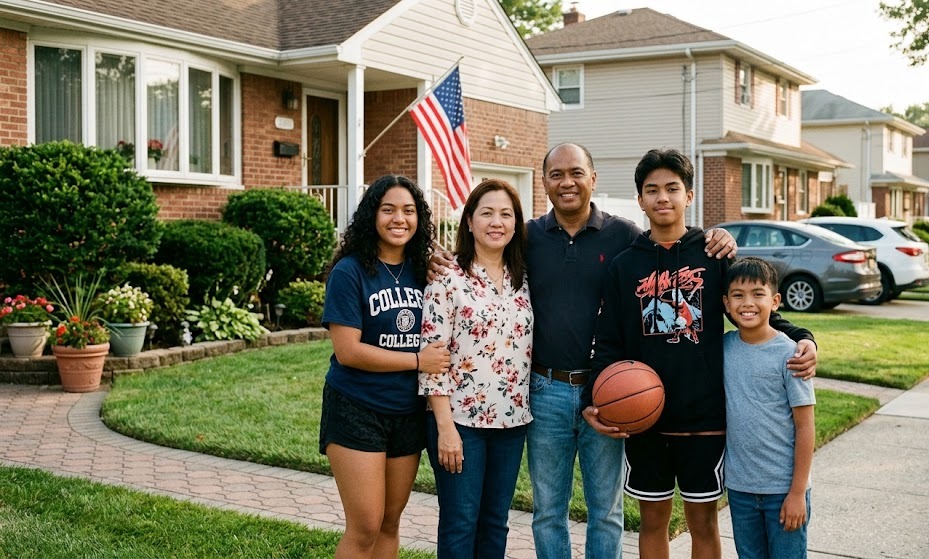
A Filipino family at home in the U.S. after EB-3 sponsorship
For the rest of your life

A permanent home in the U.S.

A real green card — not a temporary work visa. The legal right to live, work, and stay in the United States for the rest of your life. No more visa renewals. No more uncertainty about what happens next.

Your whole family

You arrive together.

Your spouse and your unmarried children under 21 travel with you on the same case. They become green card holders too. Your immediate family is not split across two countries.

For your children

Your kids grow up American.

Any children born to you in the U.S. are American citizens automatically. Your existing children, as green card holders, grow up in U.S. schools and become eligible to apply for U.S. citizenship themselves after the qualifying period.

After the qualifying period

A path to U.S. citizenship.

After holding a green card for the time required under U.S. law, you become eligible to apply to become a U.S. citizen yourself. The 4–5 year wait is a starting point — not an ending one.

Process questions

Common questions about the process.

If your question isn't here, ask us on the eligibility call. Anything legal goes straight to your attorney.

Can I work in the U.S. while my case is pending?
No. A pending case is not work authorization. You can only work in the U.S. for your sponsor once the visa is issued and you've entered as a lawful permanent resident.
What if my priority date doesn't become current for years?
That's the realistic expectation. Plan on years. Your priority date is held while you continue working in the Philippines. It's portable across employers in some cases — your attorney can advise.
What happens if my sponsoring employer goes out of business?
If your sponsor can no longer continue your case and we cannot place you with another employer in our network within 6 months — you get every dollar you've paid us back. That commitment is in your contract.
Can my parents or siblings come with me?
No. Only your spouse and your unmarried children under 21 can come with you on your EB-3 case. Later, once you are a green card holder, you may be able to file separate cases for some family members — but those are different visa categories with their own multi-year waits.
Do I need to give notice to my current job in the Philippines?
Not until your visa is issued and travel is scheduled. Give notice when you have a real travel date. Don't quit on a pending case.
What if I fail the immigration medical exam?
Most findings are treatable, not disqualifying. Harder findings may need a waiver. Your attorney advises if something comes up.
Can I change employers after I arrive in the U.S.?
Sponsorship is tied to a specific employer and role. Permanent residents can later change jobs in some circumstances. Talk to your attorney first — and read your contract on what you owe the sponsor.
How is this different from a tourist visa or H-2B?
Tourist visa: no work authorization. H-2B: temporary, seasonal, no green-card path. EB-3: immigrant visa, longer wait, lawful permanent residence for you and immediate family if approved.

Now that you've read the process, see if you qualify.

The eligibility call confirms whether the program is a fit, walks you through where you'd sit in this process, and answers your specific questions. No payment, no commitment.

See if you qualify
Takes ~2 minutes We check fit before any payment No commitment